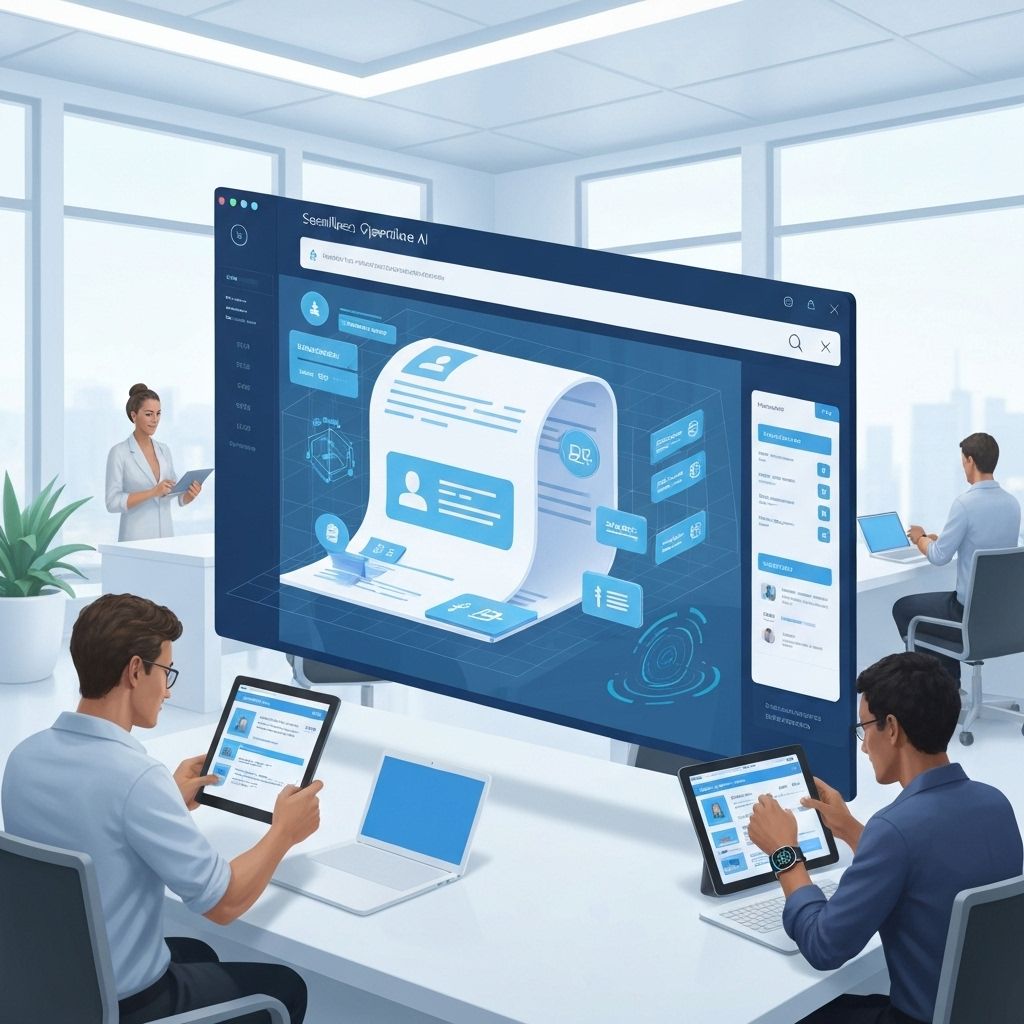
The shift from monolithic billing engines to agile, intelligent billing platforms represents one of the most significant transformations in the SaaS industry. Modern billing is no longer just about generating an invoice; it's a strategic revenue operation tool that uses AI to prevent leakage, optimize pricing, and accelerate cash flow. This definitive guide explores how modern platforms are achieving financial excellence.
For SaaS leaders, the focus has moved beyond simply processing subscriptions. Today, the platform must handle complex usage-based pricing, manage global tax compliance, and, crucially, leverage data to ensure every dollar owed is collected quickly and efficiently. This transition defines the **Future of Billing Software in SaaS Companies**.
I. Revenue Leakage: The Silent Killer of SaaS Growth
Revenue leakage is the unintended loss of income due to systemic failures, poor data management, or inefficient collections. For high-growth SaaS companies, this can amount to 5-10% of total revenue. Modern billing platforms are engineered to close these holes.
💧 Key Leakage Points Addressed by Automation
Metering and Usage Skew
Ensuring every metered event (API calls, storage, compute time) is accurately captured and reconciled before billing runs. Automated event correlation prevents under-billing.
Subscription Downtime/Errors
Billing system failures or misconfigurations that pause subscriptions or prevent renewal processing. Modern systems use auto-healing and transaction logs.
Tax and Compliance Errors
Incorrect application of global GST/VAT/Sales Tax laws, leading to under-collection or audit risk. AI-driven tax engines maintain real-time compliance.
By integrating seamlessly with the product's usage metrics and the accounting ledger, the billing platform acts as a single source of revenue truth, eliminating reconciliation errors across siloed systems.
II. Speeding Collections with AI-Powered Dunning
A high days sales outstanding (DSO) crushes cash flow. Modern billing systems utilize machine learning to predict, prevent, and prosecute payment failures—a process known as **smart dunning**.
💡 Predictive Payment Failure Modeling
AI models analyze historical transaction data to predict which customer payments are likely to fail due to factors like card expiry, bank failure rates, or typical customer behavior patterns. This predictive insight enables pre-emptive actions:
- 💳 Smart Retries: Instead of immediate failure, the system schedules retry attempts based on the optimal time and day predicted to succeed for the specific issuing bank or geography.
- 📧 Personalized Communication: Dunning emails are dynamically generated with customized language, tone, and urgency based on the customer’s value and history, maximizing response rates.
- 🔔 Proactive Alerts: Customers are alerted days before a high-probability failure, giving them a chance to update their card details voluntarily.
The goal of smart dunning is not just recovery, but **retention**. By minimizing involuntary churn caused by payment failures, the billing system becomes a direct driver of customer lifetime value (CLV).
III. The Strategic Transformation of Finance Operations
Modern billing platforms move the finance team from reactive bookkeeping to proactive strategic planning. The platform becomes the backbone for forecasting, compliance, and product pricing.
📊 Real-Time Revenue Recognition
Compliance with standards like **ASC 606 and IFRS 15** (for global SaaS) requires precise separation of recognized revenue, deferred revenue, and contract assets/liabilities. Older systems rely on monthly manual spreadsheet work.
A modern platform automates revenue recognition at the moment of the transaction, providing the finance team with real-time, audit-ready reports. This significantly reduces closing time and eliminates human errors associated with complex allocation rules.
📈 Dynamic Pricing Optimization
The next frontier is using AI in the billing engine itself to recommend **optimal pricing tiers** or **usage limits** for specific customer segments, maximizing the Average Revenue Per User (ARPU). By analyzing consumption patterns, the billing platform can identify:
- Customers who are heavily subsidized by flat-rate plans and should be moved to usage-based models.
- Price sensitivity among different industry segments to adjust regional pricing dynamically.
- The optimal point at which a customer should be contacted for an upsell based on their current usage volume.
IV. The Technical Requirements: Modularity and Integration
A legacy billing system is often tightly coupled to the core application, making updates slow and complex. The future demands modular, API-first architecture.
🔌 API-First Design for Extensibility
The platform must expose robust APIs that allow product, sales, and engineering teams to interact with billing data without requiring changes to the core engine. This enables rapid deployment of new pricing experiments (e.g., promotional trials, custom quotes) without a long engineering cycle.
🔗 Seamless Ecosystem Integration
A modern billing system must function as a central nervous system for revenue operations, integrating instantly with the following mission-critical tools:
- CRM (Salesforce, HubSpot): To ensure Sales has visibility into billing history and contract renewal dates. (See our guide on AI-Powered CRM Systems).
- ERP/Accounting (NetSuite, SAP): For automated ledger entries and reconciliation.
- Data Warehouses (Snowflake, BigQuery): For BI reporting and advanced AI analysis of payment trends.
- Usage Metering Services: To ingest high-volume, granular usage data reliably.
The shift to a decoupled microservices architecture ensures that if one component (e.g., the dunning engine) fails, the rest of the billing process (e.g., invoicing) remains fully operational.
🚀 V. Implementation Checklist for SaaS Finance Leaders
Migrating to a modern billing platform is a major undertaking. We recommend a structured, phased approach to minimize risk and maximize time-to-value:
1. Define Your Pricing Matrix
Map all current, legacy, and planned pricing models (subscriptions, usage, one-time fees, credits) into a unified framework before migration.
2. Data Migration and Reconciliation
Migrate customer records and outstanding invoices. Run old and new systems in **parallel (shadow mode)** for two billing cycles to ensure zero data loss.
3. Tax Engine Setup and Verification
Verify all global tax jurisdictions and rules are correctly configured in the new system. Integrate with specialized tax services (e.g., Avalara, TaxJar).
4. Dunning Strategy Customization
Customize the AI-dunning logic, communication templates, and retry schedules based on your specific customer demographics and payment trends.
⭐ Conclusion: The Billing Platform as a Growth Lever
The billing platform has evolved from a transactional necessity into a core component of the SaaS revenue engine. By automating revenue recognition, eliminating leakage through precise metering, and speeding collections with intelligent dunning, modern solutions provide finance teams with the agility needed to support hyper-growth and complex global expansion.
The future of SaaS finance is defined by **automation, intelligence, and integration**. Investing in a next-generation billing platform is one of the most direct ways to increase both net retention and operational efficiency simultaneously.
Is your billing system holding back your growth?
Explore Hanva Technologies' custom SaaS solutions designed for high-volume, usage-based billing and integrated finance operations.
Discover Our Billing Software